Summer is finally arriving in Europe—longer days, outdoor brunches, weekend getaways… and, like it or not, UV rays.
But here’s the truth: no matter your age, skin tone, or skincare routine (or lack thereof), facial sunscreen is the most important care for your skin’s long-term health.
It's not just for the beach. It's a daily shield against skin aging, pigmentation spots, and invisible aggressions. Whether you're 15 or 60, male or female, a skincare expert or a complete novice, this guide will explain the essentials:
- Why sunscreen is essential
- How to choose the one that best suits your skin
- When (and how) to apply it correctly
- Answers to frequently asked questions – without judgment
Consider facial sunscreen as insurance for your skin: invisible, reliable, and whose importance you only realize in its absence. UV exposure is cumulative, meaning even those five minutes of walking the dog or grabbing coffee count. Your skin remembers every ray.

Why facial sunscreen is essential all year round
Let's be clear:
- UVA rays age the skin by penetrating deep into the dermis, causing wrinkles and long-term damage.
- UVB rays burn the surface of the skin.
- Both increase the risk of skin cancer.
In summary:
- UVA = skin aging (A for Aging)
- UVB = sunburn (B for Burning)
UVA rays are insidious. It is estimated that up to 80% of UV rays pass through windows, clouds, and pollution. They are present all year round, from grey January to sunny August. So that cloudy Tuesday morning? Yes, your skin still needs protection.
Are you using active ingredients like retinol or acids at night? Your skin becomes more sun-sensitive the next day.Facial sunscreen is not a seasonal product. It's a daily shield against invisible aggressions. Using it every day helps prevent fine lines, skin sagging, dark spots, and more serious consequences.
Sunscreen or moisturizer first?
In a skincare routine, the order of application directly impacts product effectiveness. Here's the golden rule:
Moisturizer first, sunscreen last.
Sunscreen needs to stay on the surface to form a uniform protective barrier. Applying it under other products reduces its effectiveness. Imagine it like a raincoat: it only works when it's the outer layer.
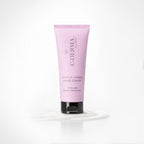
But if your sunscreen is also moisturizing (like a day cream with SPF), you can simplify. For example, the C Derma Facial Sunscreen SPF50 is a light, hydrating formula that doubles as a day cream.
Tip: If you wear makeup, apply sunscreen after your skincare, but before foundation or primer.

Which facial sunscreen should you choose based on your skin type?
Choosing a facial sunscreen suited to your skin type is essential for daily comfort and effectiveness.
For oily or acne-prone skin:
-
Choose non-comedogenic formulas (that do not clog pores)
-
Opt for gel or fluid textures with mattifying ingredients like niacinamide or silica
-
Avoid heavy oils like coconut oil; even if beneficial, they can increase shine.
For sensitive skin:
- Prefer mineral or physical sunscreens (with zinc oxide or titanium dioxide)
-
Avoid alcohols, added fragrances, and harsh preservatives
-
Look for labels such as "dermatologically tested" or "for sensitive skin"
For combination skin:
- A light and hydrating sunscreen is ideal
-
Avoid ultra-matte textures that can dry out cheeks and make makeup uneven
For darker skin tones:
- Choose a formula that doesn't leave a white cast—many modern mineral sunscreens now have an invisible finish.
C Derma Facial Sunscreen SPF50 meets many of these criteria: suitable for sensitive skin, dermatologically tested, and with a finish that completely disappears on the skin.
Daily facial SPF: how to apply your sunscreen correctly
A good sunscreen is not enough: its effectiveness also depends on how it is applied.
- Use two full finger-lengths of product for the face and neck
- Apply to the hairline, ears, eyelids, neck, chest, and hands
- Apply 15 minutes before sun exposure
- Reapply every two hours, or immediately after swimming or sweating
- Remember: windows do not block UVA rays
If you wear makeup, let the sunscreen absorb completely, then apply your primer. For touch-ups, use setting sprays or powders with SPF.
Important: applying too little sunscreen significantly reduces its protection. A thin layer of SPF 50 can act like a mere SPF 15. Quantity is key.
A daily habit, a great long-term benefit
According to dermatologists, a large part of visible skin aging is linked to UV exposure..
Sunscreen is not just for preventing sunburn or tan lines today—it also prevents wrinkles, pigmentation spots, and loss of elasticity tomorrow.It's the best-kept secret, yet the most obvious, in skincare. Think of it as a way to protect your skin's future. Little effort, big benefits. A 30-second habit that pays off for decades.
What is the best daily facial sunscreen?
- Broad-spectrum protection (UVA + UVB)
- With an SPF 50
- Non-greasy finish
- Compatible with your lifestyle and skin type
- "Water resistant" if you are active
- "Dermatologically tested" if you have sensitive skin
- "Non-comedogenic" if you are prone to blemishes
- Overly fragrant formulas
- Lack of UVA rating (look for a "PA" or "UVA" label)

FAQ - Facial sunscreen: frequently asked questions
What is the difference between UVA and UVB rays?
UV rays do not have the same impact on the skin.
UVA rays penetrate deeply and are responsible for skin aging (wrinkles, spots, loss of elasticity).
UVB rays, on the other hand, act on the surface and cause sunburn. That's why it's essential to use a facial sunscreen with broad-spectrum UVA UVB protection, preferably with SPF50, even daily.
Should I choose SPF 30 or SPF 50 sunscreen for my face?
SPF 30 blocks about 97% of UVB rays, compared to 98% for SPF 50.
The difference may seem small, but it becomes significant with daily exposure.
Furthermore, a facial SPF 50 sunscreen is generally recommended, especially for:
- sensitive skin
- skin exposed to pollution
- or when using active ingredients (acids, retinol)
Should I apply moisturizer first or sunscreen?
Always apply moisturizer first, then sunscreen. Sunscreen forms a protective layer on your skin—applying it first reduces its effectiveness. Exception: If your sunscreen also acts as a moisturizer (like a hydrating sunscreen), you can use it alone.
What is the best facial sunscreen for sensitive skin?
The best sunscreen for sensitive skin is fragrance-free, alcohol-free, and dermatologically tested. Mineral filters like zinc oxide or titanium dioxide are often better tolerated. The goal is to protect the skin without causing irritation or reaction.
Which facial sunscreen is best for oily or blemish-prone skin?
If you have oily or acne-prone skin, choose a non-comedogenic facial sunscreen with a light texture such as a gel or fluid. These formulas protect the skin without weighing it down or clogging pores, while also limiting shine.
Active ingredients like niacinamide are particularly beneficial: they help regulate excess sebum, refine skin texture, and maintain a clearer complexion, without compromising the effectiveness of sun protection.
Does sunscreen prevent tanning?
Sunscreen significantly reduces tanning by blocking UVB rays, but it doesn't completely eliminate sun exposure.
A slight tan is still possible, but without the damage associated with excessive exposure.
However, tanning remains a sign of stress for the skin.
Does sunscreen have an expiration date?
Yes. Most sunscreens expire 12 to 24 months after opening. Check the PAO symbol (e.g., 12M = 12 months). A change in odor, texture, or color is a sign that it's time to replace it. Indeed, expired sunscreen provides much less effective protection.
Which facial sunscreen should you choose for daily use?
The best daily sunscreen is a broad-spectrum SPF50 UVA + UVB, adapted to your skin type (oily, sensitive, combination). It should have a pleasant texture, not leave a white film, and suit your lifestyle—like the C Derma Facial Sunscreen SPF50.
How much sunscreen should I use on my face?
Can I skip sunscreen if my foundation contains SPF?
No. Makeup with SPF does not replace real sunscreen. It generally offers insufficient protection and is not applied in a quantity sufficient for effective protection.

Articles you might like
 Stress & inflammation de la peau
Stress oxydatif : quel impact sur la peau ?
Invisible mais quotidien, le stress oxydatif peut perturber l’équilibre de la peau et contribuer à son vieillissement. D’où vient-il, quel rôle jo...
 Actifs & science de la peau
Biotine et chute de cheveux : quel rôle joue la vitamine B8 ?
Souvent associée à la pousse et à la chute des cheveux, la biotine joue un rôle bien précis dans l’organisme. Carence, cheveux fragilisés, suppléme...
 Actifs & science de la peau
Gummies cheveux : comment fonctionnent-ils et quels résultats attendre ?
Biotine, zinc, vitamines… Les gummies cheveux concentrent plusieurs nutriments dans un format facile à intégrer au quotidien. Mais peuvent-ils réel...
 Actifs & science de la peau
Nutricosmétique : quels bienfaits peut-on réellement attendre pour la peau ?
Vitamines, antioxydants, compléments alimentaires… La nutricosmétique propose de prendre soin de la peau aussi de l’intérieur. Quels sont ses véri...