Stress doesn't just affect your mood or sleep; it's also directly visible on your face. You've probably noticed that during a stressful period, your features seem drawn, your skin tired, and wrinkles suddenly appear more pronounced.
Is this merely an impression, or is there a genuine link between stress and wrinkles?
In reality, several biological mechanisms explain why stress can temporarily alter the appearance of your face.
Discover how they work and what actions can help maintain smoother, more comfortable, and radiant skin.
Can stress really make wrinkles more pronounced?
The answer is yes, even if stress alone isn't responsible for the appearance of wrinkles.
When faced with a situation perceived as stressful, the brain activates a natural response in the body involving the nervous and endocrine systems. This reaction leads to the release of cortisol, as well as other mediators like adrenaline.
By sustainably increasing cortisol levels, stress disrupts the skin's natural repair mechanisms and promotes oxidative stress. These imbalances can make existing wrinkles more visible and accelerate the appearance of the first signs of aging.
Cortisol: a natural response to stress… but not without consequences
Cortisol, often called the "stress hormone," is a hormone produced by the adrenal glands when the body has to cope with a source of stress.
In the short term, it plays an essential role: it increases alertness, mobilizes energy reserves, and helps the body adapt quickly. This reaction is normal and indispensable.
The problem arises when stress becomes chronic and cortisol levels remain elevated for several weeks or months.
In the long term, this excess cortisol disrupts several essential skin functions by:
- weakening the barrier function
- increasing transepidermal water loss
- slowing down certain skin renewal mechanisms.
Does oxidative stress accentuate wrinkles?
Chronic stress promotes the excessive production of free radicals, unstable molecules responsible for oxidative stress. When they become too numerous, they damage skin cells as well as certain structural proteins, such as collagen and elastin.
Fibroblasts, responsible for producing these proteins, then see their activity decrease. Collagen synthesis slows down, elastin fibers become disorganized, and natural hyaluronic acid degrades more quickly.
Without instantly causing new wrinkles, these imbalances make the skin less plump, less elastic, and less radiant. Expression lines, such as dehydration lines, then become more visible, particularly on the forehead, around the eyes, or around the mouth.
Note: if you want to understand in more detail the link between the brain, cortisol, and inflammatory skin reactions, consult our article on stress and skin.
Why do wrinkles become more visible during periods of stress?
Wrinkles that seem to appear or deepen during a difficult period are generally the result of several phenomena that combine and temporarily modify the appearance of the skin.
Repeated muscle contractions
When stressed, we tend to furrow our brows, clench our jaw, or squint without even realizing it. These repeated micro-contractions constantly solicit facial muscles and gradually accentuate expression lines.
When stress is prolonged, the repetition of these muscle contractions can gradually make expression lines more apparent.
Dehydration makes fine lines more visible
Less hydrated skin often appears:
- less supple;
- less plump;
- more marked.
Dehydration lines, sometimes subtle normally, then become more pronounced, particularly around the eyes and mouth.
The complexion loses its radiance
Stress, often associated with fatigue and lack of sleep, can slow down blood microcirculation.
The skin loses its luminosity, features are less rested, and natural shadow areas of the face, particularly around the nasolabial folds or eye contour, become more pronounced. This fatigue effect visually accentuates certain wrinkles, even when their depth has not actually changed.
Skin repairs less effectively
Skin is constantly renewing itself to repair the daily aggressions it undergoes.
When this situation persists over time, some of the body's resources are mobilized to manage stress. Skin repair mechanisms then become less effective, which can slow down cellular renewal and make signs of fatigue more persistent.
Already present wrinkles thus appear more established, and the skin regains its usual smooth and luminous appearance less quickly.
What types of wrinkles are most sensitive to stress?
Not all wrinkles are sensitive to stress in the same way. Some become more pronounced during periods of tension, while others evolve more slowly over time.
Expression lines
Expression lines are generally the first to be accentuated. Repeated muscle tension makes certain facial creases more pronounced, including:
- frown lines;
- horizontal forehead lines;
- crow's feet;
- nasolabial folds.
When stress levels decrease and facial muscles relax, these wrinkles may appear less pronounced, without disappearing completely.
Dehydration lines
Dehydration lines are fine, superficial, and often temporary. They appear when the skin loses some of its water and suppleness.
They are particularly visible around the eyes, mouth, or on the cheeks and generally diminish when the skin regains a better level of hydration.
Already established wrinkles
Stress does not instantly create new deep wrinkles.
However, it can alter the appearance of existing ones. More tired, less luminous, and less plump skin reveals the natural contours of the face more, giving the impression that wrinkles are deeper than normal.
How to limit stress-related wrinkles?
It's not possible to completely eliminate daily stress. However, certain habits can limit its impact on the skin and help preserve its suppleness and radiance more durably.
Adopt a consistent routine
Stressed skin often becomes more sensitive and reactive. Instead of using many products, opt for a coherent routine consisting of a few well-chosen products.
Gentle cleansing, a hydrating serum, and an adapted day or night cream are usually enough to quickly improve the appearance of dehydration lines, without further weakening the skin.
Don't forget sun protection
Stress and UV rays both promote oxidative stress, a phenomenon involved in skin aging.
The American Academy of Dermatology recommends daily application of an SPF50 sunscreen, even in winter, to preserve skin quality and limit aggressions responsible for photoaging.

Take care of your sleep
Night is an essential period for skin renewal and repair.
Long and regular nights of sleep allow the skin to recover more effectively and help maintain a fresher and more rested complexion.
Also address the source of stress
Breathing, physical activity, heart coherence, meditation, or simple moments of recovery: there isn't one single right method to better manage stress.
The essential thing is to find habits that help sustainably reduce emotional burden. In addition to their benefits for overall well-being, they indirectly contribute to preserving skin balance.
While stress is part of life, how the skin responds to it can be influenced by simple and regular actions.

Which active ingredients should be favored against stress-related wrinkles?
No active ingredient can prevent stress from affecting the body. However, certain ingredients can support the skin when it is more fragile and limit the visible consequences of stress on the face.
Hyaluronic acid
Hyaluronic acid helps maintain good hydration levels, which helps to replump dehydration lines and restore a plumper appearance to the skin.
Biomimetic peptides
Biomimetic peptides are inspired by the skin's natural communication mechanisms. They help support its repair functions and naturally find their place in an anti-aging routine designed to support skin subjected to stress.
Antioxidants
By neutralizing some of the free radicals generated by oxidative stress, antioxidants, such as vitamin E or certain plant extracts, thus help protect collagen, elastin, and skin cells from aggressions responsible for premature aging.
CBD
At the heart of the neuro-cosmetic approach, CBD helps to soothe skin reactions associated with stress and support skin balance. It is particularly relevant when periods of tension are accompanied by redness, discomfort, or increased sensitivity, which can make signs of fatigue and wrinkles more visible.
Panthenol and Niacinamide
These two active ingredients ideally complement a routine intended for stressed skin. Panthenol promotes skin comfort and supports barrier repair, while niacinamide helps strengthen the skin's natural defenses and improve its resistance to external aggressions.
Tensing sugars from microalgae
Certain biomimetic sugars of marine origin provide a visible tightening effect a few minutes after application. They offer an immediate smoothing effect that complements the action of long-term active ingredients.
Celine's advice
During a period of stress, many people feel that their wrinkles have suddenly deepened. In reality, it is often a combination of dehydration, fatigue, and muscle tension that makes already present wrinkles more visible.
Before concluding that your skin has aged or completely changing your anti-aging routine, give it time to recover: it is not uncommon for certain marks to fade when its balance is restored.

C-Derma skincare to support stressed skin
At C-Derma, formulas are developed using a biomimetic approach inspired by the natural functioning of the skin. The goal is not only to reduce the visible signs of stress but to support the mechanisms that contribute to preserving its quality.
For skin whose wrinkles appear more pronounced during periods of stress, here are our recommendations:
-
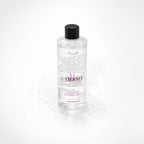
The Face Serum combines a duo of biomimetic hyaluronic acid, panthenol, and soothing active ingredients to maintain hydration and improve skin comfort.
-
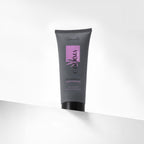
The Anti-Aging Serum combines biomimetic peptides, niacinamide, antioxidants, and tightening sugars from microalgae for an immediate smoothing effect and support for the skin's natural mechanisms.
-
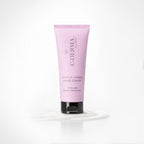
Day and Night Creams complete the routine thanks to a combination of biomimetic active ingredients and vegetable oils that help maintain more supple and comfortable skin.
-
The SPF50+ Sunscreen daily protects the skin from UVA and UVB, whose effects add to those of oxidative stress to accelerate photoaging.
Combined with a regular routine, these treatments help the skin better resist the effects of stress and preserve its comfort and radiance over time.
Conclusion
Stress not only modifies our emotional state: it also influences skin function and can make wrinkles more visible by promoting muscle tension, dehydration, and oxidative stress.
While chronic stress is now recognized as a direct factor in accelerating the appearance of wrinkles, these changes are not irreversible.
This psychobiological aging phenomenon can be prevented or corrected with an adapted routine.
Taking care of your skin is also taking care of your general balance: the two are intimately linked.
FAQ: what you need to know about stress and wrinkles
What is the link between stress and wrinkles?
Stress does not directly cause the appearance of new wrinkles, but it can make them more visible. Repeated muscle tension, skin dehydration, oxidative stress, and the slowing down of skin repair mechanisms contribute to accentuating existing expression lines and fine wrinkles.
Can stress-related wrinkles disappear?
Dehydration fine lines and some expression lines can fade when the skin regains a good level of hydration and tension decreases. However, established wrinkles do not disappear spontaneously, even if they may appear less pronounced with an adapted routine.
Which active ingredients should be favored against stress-related wrinkles?
Stressed skin generally benefits from a global approach rather than a single active ingredient. Hyaluronic acid helps maintain hydration, biomimetic peptides support natural repair mechanisms, while antioxidants help protect the skin against oxidative stress. For sensitive skin or skin prone to redness, soothing active ingredients such as CBD or panthenol can also complement the routine.
Can cortisol cause wrinkles?
Cortisol does not directly create wrinkles. However, when it remains high for a long period, it promotes oxidative stress, slows down certain skin repair mechanisms, and weakens its skin barrier. These changes can make existing wrinkles more visible and contribute to premature skin aging.
Why are my wrinkles more pronounced when I'm tired?
Fatigue is often accompanied by skin dehydration, a slowdown in microcirculation, and a reduced capacity for skin repair. The features then appear more drawn and expression lines or fine wrinkles temporarily become more visible, without their depth necessarily increasing.
Articles you might like
 Rougeurs & rosacée
Pourquoi ai-je le visage rouge après la douche ?
Quelques minutes sous l’eau chaude et votre visage devient rouge, chaud ou inconfortable ? Découvrez pourquoi certaines peaux rougissent plus faci...
 Rougeurs & rosacée
Rougeurs après le rasage : pourquoi apparaissent-elles et que faire ?
Joues qui rougissent, cou qui picote, petits boutons quelques heures après le rasage : ces réactions sont fréquentes, notamment sur les peaux sensi...
 Rougeurs & rosacée
Rougeurs au visage et ménopause : causes et solutions
Bouffées de chaleur, sécheresse, sensibilité accrue… À la ménopause, les bouleversements hormonaux peuvent également affecter la peau. Comprendre ...
 Stress & inflammation de la peau
Peau stressée : pourquoi le stress rend-il le teint terne et fatigué ?
Le stress ne marque pas seulement les traits : il peut aussi perturber l’équilibre cutané et rendre le teint plus terne. Découvrez comment reconnaî...